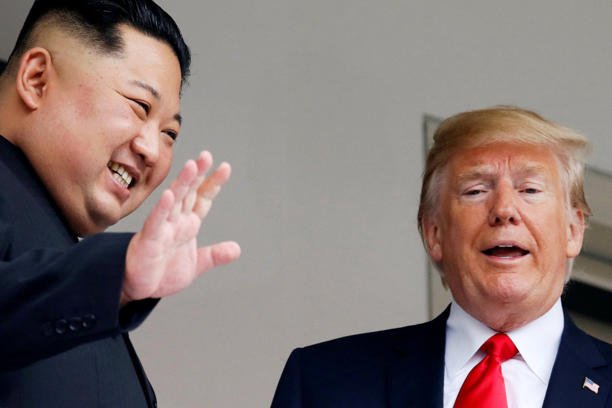

WASHINGTON – A high-stakes Trump Kim Jong-un summit was nearly arranged during U.S. President Donald Trump’s recent Asia tour, according to The Wall Street Journal (WSJ). To secure the meeting, Washington seriously considered declaring a formal end to the Korean War. Additionally, the administration weighed dropping its demand for North Korea’s immediate denuclearization.
However, the historic face-to-face meeting ultimately failed to materialize. North Korea reportedly presented last-minute conditions that the United States could not accept.
Although U.S. officials have not publicly confirmed the report, political analysts point to domestic pressures. Following recent setbacks in the midterm elections, Trump allegedly explored major shifts in Korean Peninsula security as “negotiation cards” to achieve a quick diplomatic victory.
Why the Trump Kim Jong-un Summit Was Pursued
Ahead of his appearances at the ASEAN summit in the Philippines on the 17th and the APEC summit in Shenzhen on the 18th–19th, Trump reportedly pressured his aides to arrange a Trump Kim Jong-un summit. Consequently, the White House drafted bold incentives to bring Pyongyang back to the table.
According to U.S. officials familiar with the discussions, Washington reviewed two major proposals:
- Ending the Korean War: Signing a formal declaration to conclude the 1950–1953 conflict, which currently remains under an armistice.
- Halting Denuclearization Demands: Issuing a statement that would not require North Korea to dismantle its nuclear arsenal, while still stopping short of recognizing it as an official nuclear state.
In return, the U.S. planned to demand a strict freeze on North Korean nuclear and missile tests. Furthermore, Washington discussed opening a formal “liaison office” in Pyongyang as a first step toward normal diplomatic relations.
Security Experts Warn of Severe Risks
Foreign policy specialists warn that these proposals could dramatically weaken regional security. Specifically, a formal declaration ending the Korean War might trigger immediate demands to dissolve the U.N. Command and withdraw American troops from South Korea.
“The Trump administration seems to have examined the extent to which it could make symbolic concessions to North Korea,” said Shim Sang-min, a senior research fellow at the Asan Institute for Policy Studies. “Once a declaration is made, the focus would shift to establishing a peace regime, and the nuclear issue would almost disappear from the agenda.”
Similarly, Park Won-gon, a professor of North Korean studies at Ewha Womans University, warned that dropping denuclearization would hand Pyongyang a massive strategic win.
“Even if the U.S. declares it will not demand denuclearization, it would pave the way for North Korea’s nuclear possession to be accepted,” Park explained. The WSJ also noted that treating North Korea as a de facto nuclear power would alarm key allies in South Korea, Japan, and Europe.
What Blocked the Trump Kim Jong-un Summit?
Despite Washington’s willingness to offer unprecedented concessions, the Trump Kim Jong-un summit collapsed over Pyongyang’s counter-demands. While the WSJ stated that North Korea’s exact terms remain secret, Kim Jong-un has long demanded full recognition as a nuclear-armed nation.
Professor Park suggested that Pyongyang likely demanded the immediate lifting of crippling economic sanctions. Washington rejected this condition, as doing so would strip the U.S. of its strongest diplomatic leverage. Meanwhile, a White House official pushed back against the report, claiming, “There were no efforts to hold a meeting with Kim Jong-un.”
Past Unanswered Letters to Pyongyang
The WSJ report also revealed Trump’s repeated, unsuccessful attempts to contact Kim over the past year. Initially, Trump tried calling the North Korean leader by phone, but his calls went unanswered.
Later, Trump wrote a personal letter and sent White House staff to deliver it outside North Korea’s U.N. mission in New York. However, during a subsequent U.N. session, a North Korean diplomat bluntly tossed the unopened letter back in front of the American representative.
Future Outlook for U.S.-North Korea Talks
Even though a Trump Kim Jong-un summit did not happen during the Asia tour, Trump remained optimistic. Speaking to NBC before leaving Shenzhen, he stated, “Although I have a good relationship with the North Korean leader, the meeting did not materialize this time.”
The interviewing journalist later revealed on social media that Trump added, “We will meet someday.” At a press conference on the 20th wrapping up his trip, Trump confirmed he discussed Korean Peninsula stability with regional leaders, though he avoided mentioning Kim by name.
https://mrpakistaniofficial.com/%d8%a7%d9%81%d8%ba%d8%a7%d9%86-%d8%b7%d8%a7%d9%84%d8%a8%d8%a7%d9%86-%d9%b9%db%8c-%d9%b9%db%8c-%d9%be%db%8c-%d8%a8%db%8c-%d8%a7%db%8c%d9%84-%d8%a7%db%92-%d8%af%d8%a7%d8%b9%d8%b4/